CASE STUDY
Role
Product Designer → Design Lead
Team
Developers, Product stakeholders
Initially 3 designers. I later continued the project independently.
Responsibilities
Establish design foundations and contribute to the style guide ; Lead discovery and design new workflows; Simplify complex operational processes; Collaborate with stakeholders and engineering teams
Context
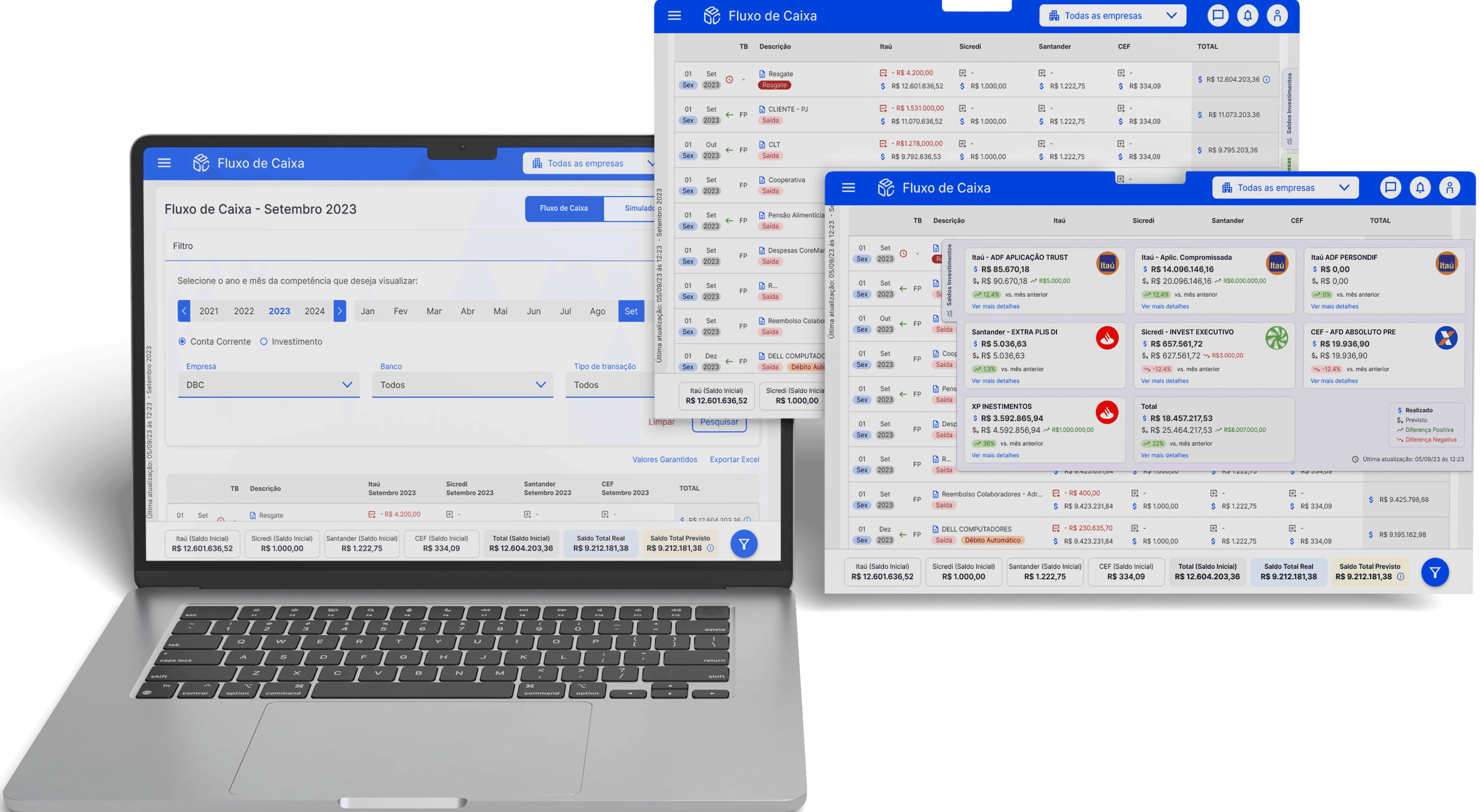
ECOS is an internal platform developed for DBC Company, a technology firm that provides IT outsourcing, consulting, and digital product development services for organizations across different industries.
The platform was originally created during the pandemic, when the company needed to quickly enable remote operations and support internal processes digitally. To accelerate delivery, available engineering resources were allocated to the project, allowing the system to be built rapidly and meet immediate operational needs.
Over time, ECOS evolved into a large internal platform supporting multiple workflows used by different teams across the company.
When the company later introduced a new visual identity, updating ECOS became a priority. This initiative created an opportunity not only to refresh the interface, but also to rethink the platform’s design foundations and overall user experience.
The Challenge
When the design team joined the project, the initial request was to update ECOS according to the company’s new visual identity.
However, after reviewing the platform’s structure and workflows, it became clear that the challenge went far beyond a visual update.
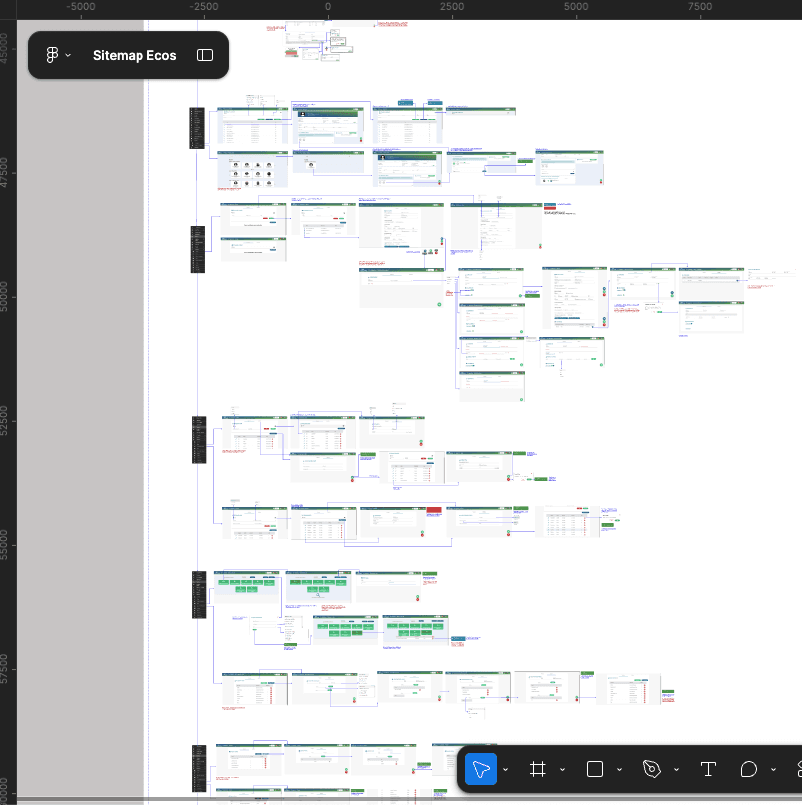
Over time, the platform had grown into a large and complex system composed of multiple operational modules used across different areas of the company.
Because the product evolved without a structured design process, different parts of the system had been developed with varying interface patterns and interaction approaches.
As a result, the experience had become fragmented. The platform’s growing sitemap and inconsistent design patterns made navigation harder, increased cognitive load for users, and created challenges for maintaining and expanding the system.
Rather than simply applying the new visual identity, it became clear that ECOS required a more fundamental design approach to bring consistency, improve usability, and support the platform’s continued growth.
Key Problems
After reviewing the platform’s structure and workflows, several core issues became evident. These problems were affecting both the usability of the system and its ability to scale as the platform continued to grow.
Interface inconsistency
Different modules used varying UI elements, typography styles, button patterns, and layout structures. This lack of consistency made the experience harder to navigate and increased the cognitive load for users moving between workflows.
Complex navigation structure
As new workflows were added over time, the platform’s sitemap expanded significantly. Finding specific tasks or features required navigating through multiple sections, making the system harder to understand for new and existing users.
Lack of design standards
Without shared design guidelines, new features and modules were implemented using different approaches. This made the system harder to maintain and created inefficiencies for both designers and developers.
Operational friction in workflows
Users frequently opened support requests for tasks that should have been simple to complete within the platform, indicating usability issues and opportunities to reduce manual effort by improving workflow structures.
Design Strategy
Given the scale and complexity of the platform, addressing individual screens would not solve the underlying issues.
Instead, we defined a strategy focused on establishing design foundations and gradually improving the platform’s core workflows.
Establish design foundations
Before starting the redesign, the design team proposed creating a Style Guide to introduce consistent visual and interaction patterns across the platform. Although this approach increased the initial effort, it created a shared foundation for both design and development, helping ensure that future features and modules could be built more consistently and faster.
Enhancing usability, consistency e scalability through a robust Style Guide and UI Library
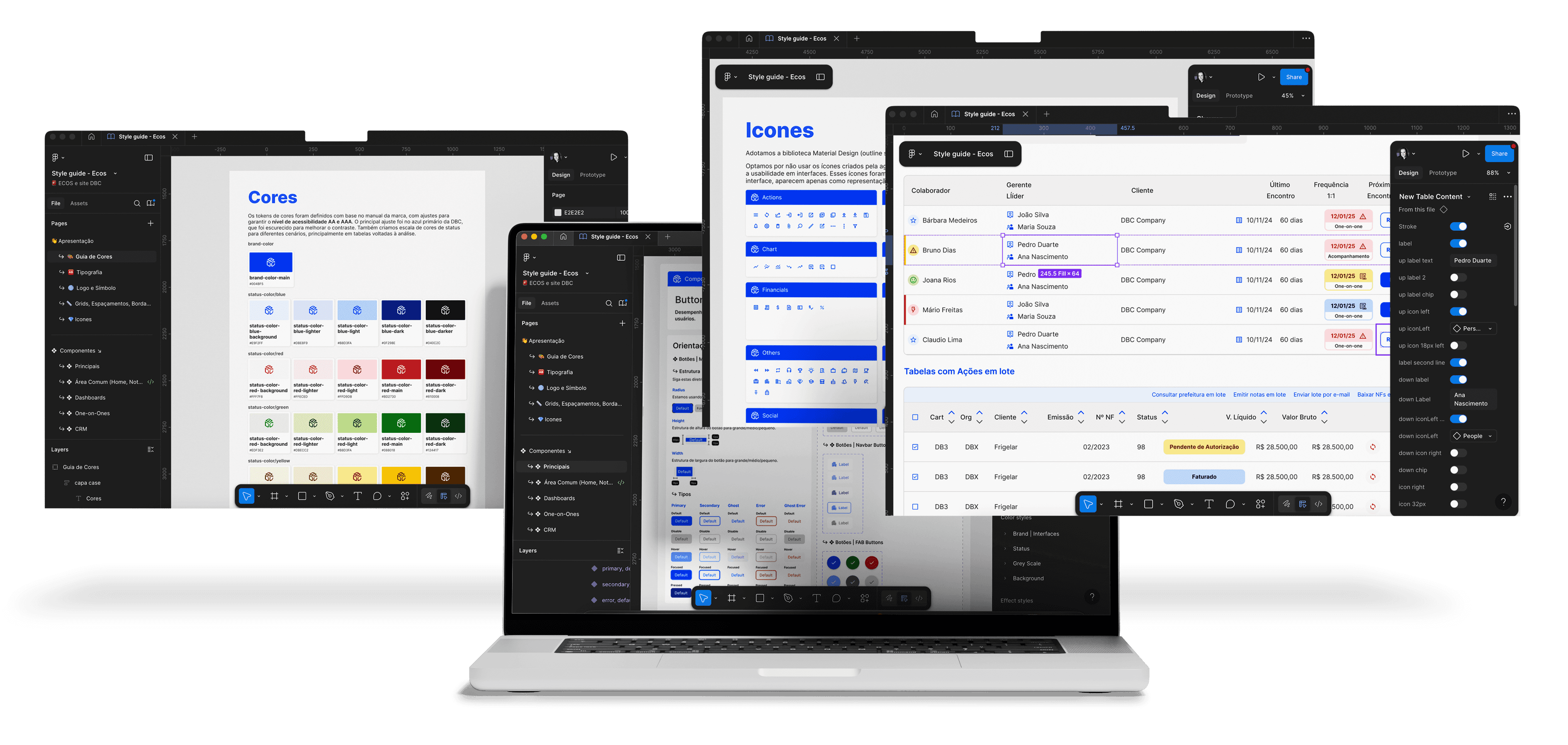
Explore the case to see the process, decisions, and outcomes behind building the design foundations for ECOS.
Prioritize shared operational flows
After establishing the design foundation, the next step was to redesign the most common workflows used across the platform. Focusing on these shared flows allowed us to reduce friction in daily operational tasks and improve the experience for a large portion of users.
Support the platform’s evolution
As design became more integrated into the product process, we also began contributing to the discovery and design of new modules that supported additional operational areas within the company. This approach helped ECOS evolve from a set of disconnected workflows into a more structured and scalable internal platform.
Expanding the role of design
As the project progressed, the value of design became more visible within the organization. Design began to be involved earlier in discussions about new workflows and product needs, contributing not only to interface updates but also to problem identification and discovery processes. During this phase, I gradually took on a Design Lead role for ECOS, I took the ownership of the project, helping guide design decisions as the platform evolved.
Core Improvements
With the design foundation established, the focus shifted to improving the platform’s usability and consistency across its main operational flows.
The redesign aimed to reduce friction in everyday tasks and create a more cohesive experience across the platform.
Consistent interface patterns
The introduction of shared UI components and interaction patterns helped create a more consistent experience across modules. Standardizing elements such as buttons, typography, spacing, and layouts reduced visual fragmentation and made the interface easier to navigate.
Improved information hierarchy
Several screens were redesigned to improve the organization of complex information. Clearer visual hierarchy and more structured layouts helped users scan information faster and understand key data more easily.
Simplified workflows
Some operational flows were redesigned to reduce unnecessary steps and improve clarity in task execution. These improvements helped make everyday tasks more intuitive and reduced dependency on support for routine actions.
A more scalable platform
By combining consistent design patterns with workflow improvements, the platform became easier to maintain and expand as new modules were introduced. This foundation allowed ECOS to evolve from a fragmented set of interfaces into a more cohesive operational system.
Impact & Results
The improvements introduced in ECOS went beyond a visual redesign. By establishing design foundations and improving core workflows, the platform became more reliable, easier to use, and better prepared to support the company’s internal operations as it continued to grow.
Improved operational efficiency
By simplifying workflows and introducing clearer interaction patterns, many everyday tasks became easier to complete within the platform. Users were able to navigate processes more confidently, reducing friction in routine operational activities.
Reduced dependency on support
As usability improved, tasks that previously required guidance or support requests became more intuitive to perform directly within the system. This helped teams operate more independently and reduced interruptions in day-to-day work.
A stronger foundation for product growth
The introduction of shared design patterns and a structured style guide created a foundation that made it easier to design and implement new modules as ECOS evolved.
This allowed the platform to expand while maintaining greater consistency and usability.
Strengthening design culture
As the project progressed, the impact of design became more visible within the organization. Designers started to be involved earlier in product discussions, contributing to discovery processes and helping shape new workflows before implementation.
This shift reinforced the role of design not only as an execution layer, but as a strategic partner in product development.
The value of designing internal tools
Internal tools often remain invisible outside the organization, but their impact on productivity and operational efficiency can be significant.
Improving the experience of these systems helps teams focus on the work they were hired to do.
Lessons Learned
Working on ECOS reinforced how impactful design can be when applied to internal operational systems.
Internal tools deserve the same design care as customer-facing products
Employees interact with internal platforms every day. When these systems are confusing or inefficient, the impact on productivity, data quality, and employee satisfaction can be significant. Designing better internal tools is not only a usability improvement — it is an investment in operational efficiency.
Design foundations accelerate long-term product evolution
Taking the time to establish a style guide and consistent design patterns early in the process required additional effort initially, but it proved essential for scalability. As new modules were introduced, having shared foundations made it easier to maintain consistency across the platform.
Design maturity grows through collaboration
As the value of design became more visible, designers were gradually included earlier in product discussions and discovery processes. This shift enabled more informed decisions and helped align solutions with real operational needs.
Designing ECOS showed how improving internal systems can have a meaningful impact on how teams operate, collaborate, and make decisions every day.